
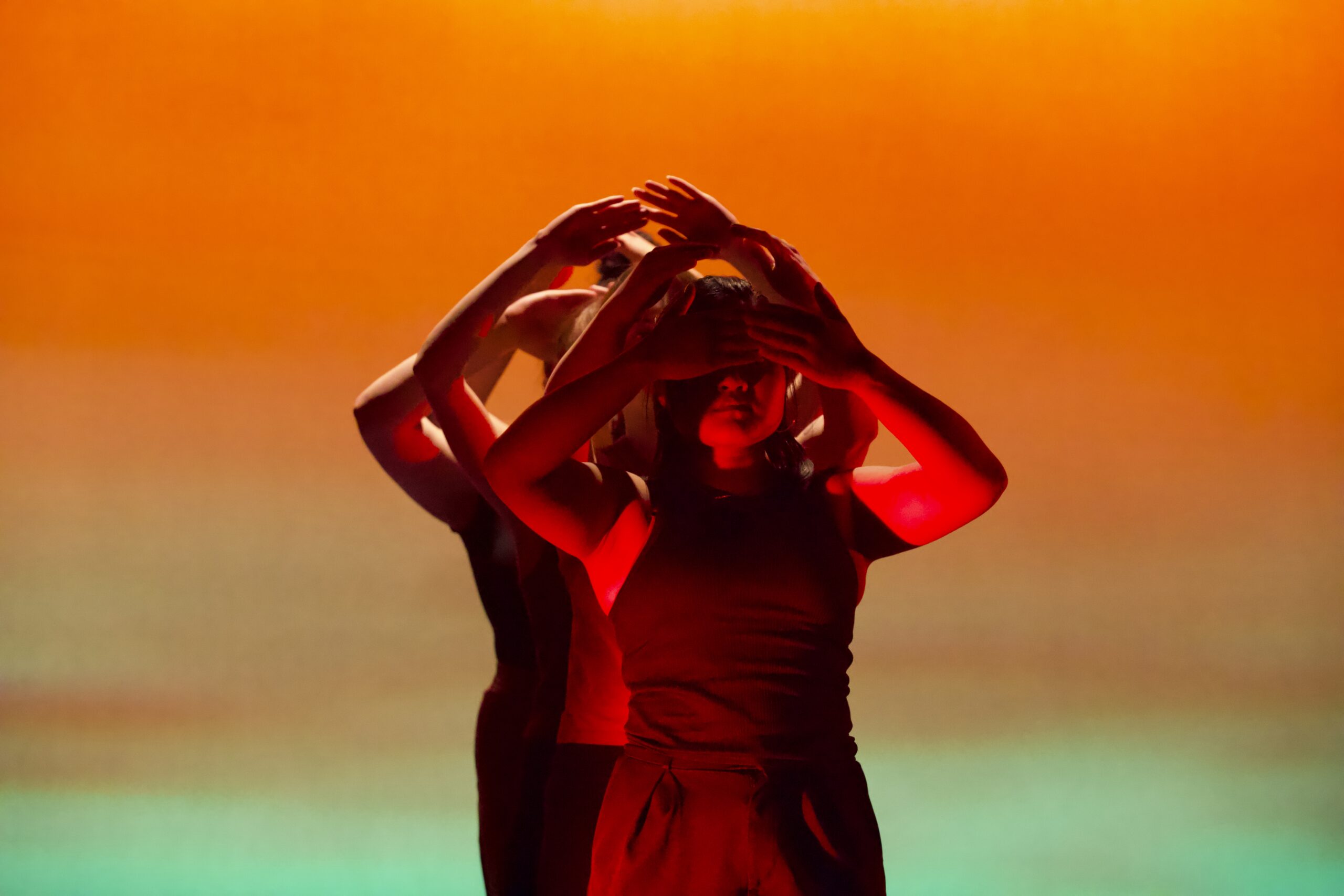
This eight-week seminar is about working together to explore connections between dance, writing, and literacy. Each week, we’ll move together gently. The movement exercises are designed for most bodies and all bodies are welcome. We’ll read a selection of critical essays that focus on dance and writing. And we’ll observe ourselves and others move as we write and imagine our way toward our own movement literacies.
Some of the big questions animating this seminar include: What happens when we make studying movement central to the process of literacy? What does moving, studying movement, and moving with others offer us as writers and stewards of culture? Can movement help us intuit the forms of our own writing? What memories come up for you as you move? Or as you observe and reflect on your movement and the movement of others? What patterns of movement feel most familiar to you and where do they come from? What are the political stakes and risks of dance?
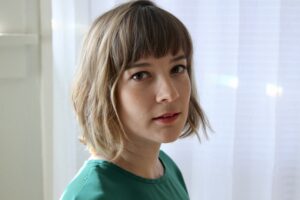
Dr. Katie Marya is a writer, literary translator, and teacher originally from Atlanta, Georgia—she also loves to dance. She earned her B.A. in Spanish from Westmont College, an M.F.A. in Poetry from Bennington College, and a Ph.D. in English from the University of Nebraska-Lincoln where she currently works as the Assistant Director of Composition.
Marya’s debut poetry collection Sugar Work was the Editor’s Choice for the 2020 Alice James Book Award and received praise from The New York Times. Her translation of Luis Othoniel Rosa’s novel El gato en el remolino (Animal Spiral) is forthcoming from Charco Press in 2026. In 2019, Marya created A Yellow Silence, a sonic, intertextual, outdoor art installation that showed in Lincoln PoPs: Global Frequencies, a public art exposition in downtown Lincoln, Nebraska. She has been awarded the James Dickey Prize in Poetry from Five Points and support from the Nebraska Arts Council and the Kimmel Harding Nelson Center for the Arts. She likes to collaborate across artistic disciplines and, for the past five years, has been especially interested in the intersecting worlds of dance and poetry in Puerto Rico and the Southern United States. More of her work can be found in AGNI, North American Review, Waxwing, Guernica, Salamander,Fence, among other literary magazines, and on the national poetry podcast The Slowdown Show.
Her current project DRUM, a hybrid poetry and essay collection, performs a historical inquiry into what a drum represents in the grief process while contending with the loss of both her brother and father to fentanyl overdoses. Like Sara Uribe’s Antígona González (2012) and Anne Carson’s Antigonick (2015), the collection participates in a lineage of women rewriting Sophocles’ Antigone into their own cultural contexts. Marya situates the bereaved sister on the porch swing, on the dance floor, and within the space of her own father’s life as a drummer and drum builder in Georgia to plumb death’s painful lessons and to celebrate a long line of drummers—interlocutors who urged Marya back toward love, acceptance, and a way to keep living.