
A little too often, we (Erin, Gavin, and Ruby) have conversations with colleagues, family, community members, as well as passersby who are concerned about the decline of literacy in the United States. Looking at the broader discourse, in just the past fourteen months, The Atlantic has published articles like the widely circulated “The Elite College Students Who Can’t Read Books”1 and “America is Sliding Toward Illiteracy”2. These articles exist outside traditional literacy scholarship, yet they also argue that there is a decline in educational standards, reading habits, reading comprehension, and test scores. And the discourse expands far beyond these two articles and traditional media. Hell, our TikTok feeds are currently bursting with commentary about “the literacy crisis.” It’s an old song.
As scholars and educators, we aren’t saying that there isn’t an ongoing shift in literacy that some characterize as a “decline” in traditional reading and writing skills, but we also know what the published research on literacy crises has discussed3. We recall James Paul Gee’s declarations that literacy crises “historically recur in Western developed capitalist societies […], often masking deeper and more complex social problems.”4 And we agree with John Trimbur’s point that “digital culture has reinvigorated the discourse of literacy crises, opening up all kinds of new opportunities for mass media pundits, scolds, killjoys, and death of the book curmudgeons.”5 Gee and Trimbur’s respective articulations of “literacy crisis” are clearly observable in the ongoing wake of the COVID pandemic and the rise of generative AI. However, the contemporary literacy crisis discourse does more than suggest that “Johnny can’t read”; instead, it continues a long-term campaign to scapegoat folks who do not meet the standards of white supremacy, racial capitalism, and cis-heteropatriarchy, especially those who demonstrate community-based literacies outside the scope of formal education. To that end, we see the current crisis as one grounded in anti-intellectualism targeted at institutions of higher education.

While universities are problematic institutions founded in colonial logics, they have also served as a site for intellectual and, even, material liberation. This contradiction (which cannot be fully examined here) enables and justifies anti-intellectualism, and, in the last two decades, the slow erosion of higher education has mutated into a full-out political attack. While examples abound, we can look at JD Vance’s 2021 speech at the National Conservatism Conference to understand the situation. In a riff on Richard Nixon’s famous quip, Vance proclaimed, “universities are the enemy” and they “transmit not knowledge and not truth, but deceit and lies.”6 These attacks are often framed as necessary counters to the “radical” indoctrination pushed by “liberal” intellectuals that has supposedly displaced traditional literacies and practical work training. This is particularly true for departments, programs, and scholars who teach and research the intersections of various racial identities, genders, sexualities, disabilities, classes, and religions, especially when those scholars are queer and/or of color. The violent literacies practiced by people like Vance are informed by specific rhetorical strategies and policy initiatives to sustain a fascist movement. The juxtaposition of fascist rhetoric with fascist policies demonstrates how far-right literacies guide the anti-intellectual movement.
We define anti-intellectualism as a skepticism and/or outright disdain for academic pursuits in research and education. In his writings, Richard Hofstadter defines anti-intellectualism as “resentment of the life of the mind, and those who are considered to represent it; and a disposition to constantly minimize the value of that life.”7 Here, we note Hofstadter’s emphasis not on the devaluing of the life of the mind but of life itself. Indeed, anti-intellectualism may target formalized learning first, but its ultimate goal is the devaluing of knowledge and ways of being outside of strict allowances of white supremacy and Western norms.
Anti-intellectualism is a manufactured phenomenon. We believe that humans are drawn to the search for knowledge and curious about the world around them. In contrast, anti-intellectualism is a set of literacy practices that are meant to draw communities away from evidence-driven inquiry and toward beliefs grounded in distrust. This can be observed in backlash against expertise, especially in journalism, the humanities, and sciences, which fuels the manosphere, climate science denial, the alt-right pipeline, the dismantling of the US Department of Education, book banning, and the necropolitical rise of artificial intelligence. In response, we contend that our current moment isn’t necessarily another literacy crisis but rather a crisis of anti-intellectual literacies.
Indeed, we know many students possess complex daily literacies that are evident when they make meaning out of a dense network of information mediated across digital/cultural platforms.8 The fact is many students that many students are consuming right-wing content and becoming susceptible to the propaganda of American white nationalist Christofascism, which feeds on anti-intellectualism. Many can––and do!––operate within the white languaging spaces where layers upon layers of dangerous mis/disinformation are allowed, perhaps even encouraged, to fester. Unfortunately, they are hyperliterate in but not necessarily critical of anti-intellectual American fascism.
Anti-intellectual American fascism aims to shape our political landscape in favor of a nationalistic authoritarian society ruled by interlocking systems of domination: white-supremacist-capitalist-patriarchy. We understand fascism specifically in this US context, wherein ideographs like <freedom> and <family values>9 are paired with surveillance and political violence against marginalized communities and those who dissent from Christian white nationalist visions of the world. Fascist literacies depend on anti-intellectualism because, without the freedom to think critically or critique systems, we cannot name the forces actively inflicting violence or pursue tactics to dismantle those systems. By explicitly naming these actions in conjunction with anti-intellectual American fascist propaganda, we highlight how literacy crisis discourse legitimizes far-right logics. And often, these rhetorical actions within the literacy crisis discourse include attacking intellectual work on digital platforms.
In his classic 1962 essay “Reflections on Anti-Intellectualism,” Morton White outlines three strategies in the anti-intellectual campaign: containment, invasion, and destruction.10 We posit that the US has endured all three strategies of anti-intellectualism as fascist literacy enactments. That is, anti-intellectualism is a fascist literacy practice because it aligns with far-right politics that use rhetoric to create and circulate scapegoats––consider the manufactured fear of “cultural Marxism” or “transgenderism”––to build movements against academics, especially queer and trans academics of color. This fascist literacy practice already occurs in the US, as scholarly knowledge is selectively deployed and maintained; books and curriculum about race, class, gender, and sexuality are censured or banned; and as a president calls for the US Department of Education to be abolished, mandates the banning of DEI, and defunds schools supportive of trans students. These moves are a coordinated effort to delegitimize the intellectual work of colleges and universities and replace it with an anti-intellectualism fueled by white supremacist Chrisofascist indoctrination.
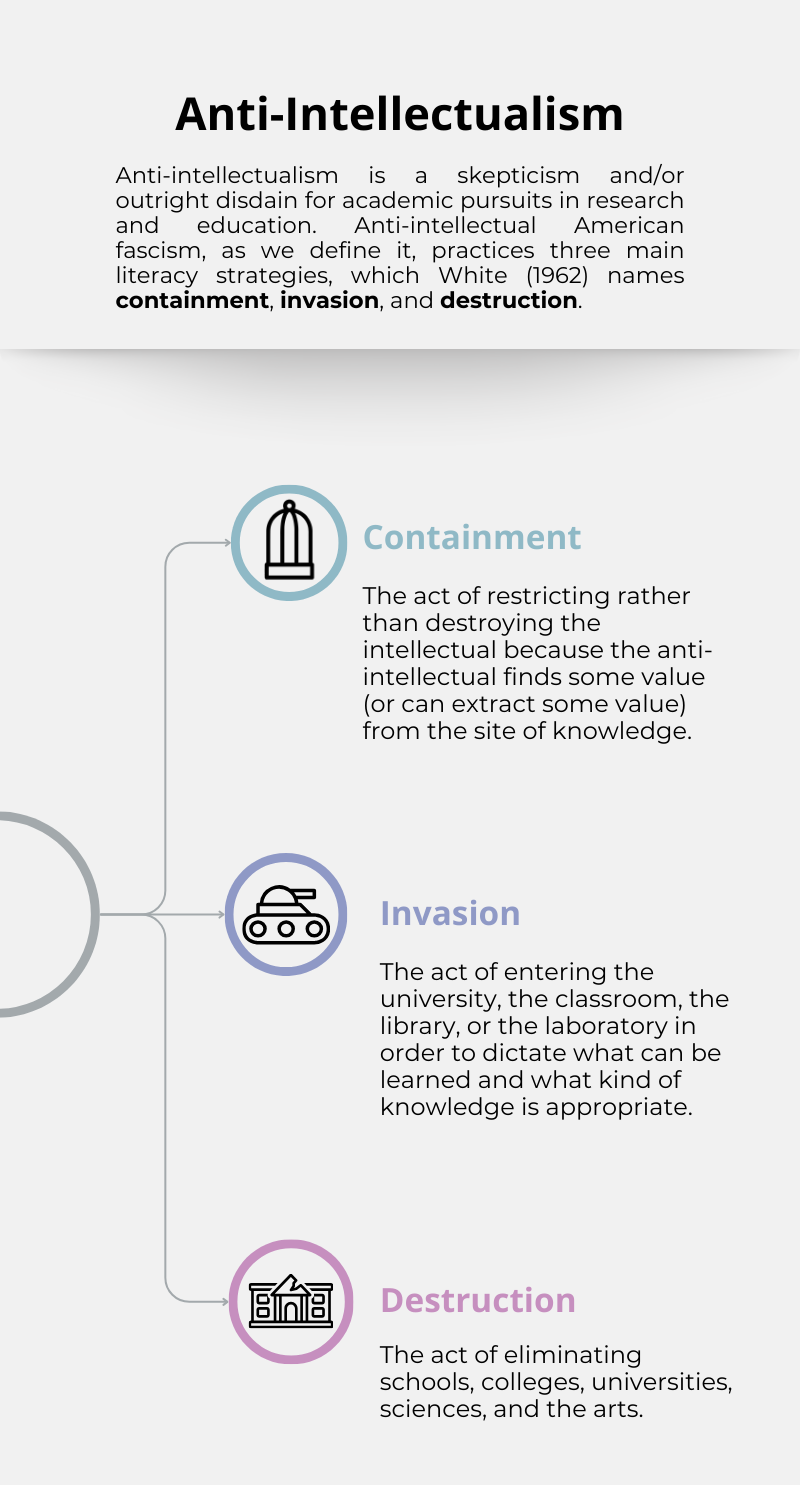
Containment, White explains, is the act of restricting rather than destroying the intellectual because the anti-intellectual finds some value (or can extract some value) from the site of knowledge. Indeed, anti-intellectual American fascist propagandists do make use of the ethos of the intellectual, when it suits them. Consider the invocation of cherry-picked studies that empower vaccine skeptics or Donald Trump’s frequent bragging about having a “good brain.” In these moments, anti-intellectuals practice the literacy of containment in order to allow the ethos of the intellectual to bolster their own claims. We can also observe these literacies through the push for AI dominance. The technical requirements of AI require expertise and, therefore, the intellectual can be tolerated and contained in order to unleash AI technologies that will further capitalistic endeavors. Through, the ultimate goal, it seems, is to practice containment until AI can make the intellectual obsolete. Containing intellectualism also means maintaining a particularly useful scapegoat that can be pointed to when the failures of white nationalism Christofascist capitalism become obvious to the general public.
The second, and currently most popular, anti-intellectual literacy practice is invasion wherein anti-intellectuals “enter the classroom, the study, the studio, or the laboratory, and dictate what shall be done and how.”11 Invasion, as rendered today, often takes on the work of censorship and is evident in the U.S. by restricting the curriculum and language that validates marginalized communities. For example, in 2023, Florida Governor Ron DeSantis and the Florida Department of Education rejected the College Board’s AP African American Studies course, claiming that the course would indoctrinate students with critical race theory12. This invasion also relies on the rhetoric of parental educational rights, which weaponizes the societal privilege of parenting to claim authority over what is or isn’t taught in classrooms despite the knowledge of experts. We’ve seen this play out at local school board meetings as anti-intellectual parents fight the boogeyman of Critical Race Theory (CRT) in K-12 classrooms. Or, returning to college campuses, efforts to censor class content and limit academic freedom are spreading rapidly through conservative legislatures and compliant university systems. Recent moves in Alabama, Florida, Ohio, and Texas to remove “divisive topics” (read: anything referencing race, sexuality, or gender as well as any content critical of American capitalism) from the curriculum––see Alabama’s SB 129 (2024); Florida’s Stop W.O.K.E/Individual Freedom Act (HB 17 2022) and SB 266 (2023); Ohio’s Advance Ohio Higher Education Act (CB 1 2025); and Texas’s SB 37 (2025).13 This form of anti-intellectual invasion directly targets the very students we argue fall victim to the true “literacy crisis.”
The third and ultimate practice is destruction, which White explains, would “eliminate schools, colleges, universities, sciences, and the arts.”14 As anti-intellectuals become more emboldened, they have made more explicit attempts to destroy knowledge-making institutions. Decades-long austerity measures have weakened many institutions and made them more dependent on private donors, corporate partnerships, or grant funding, all of which comes with strings attached. Without robust support and protected academic freedom, the crumbling of knowledge-making institutions has become apparent. For example, the far-right led a multi-year campaign against DEI by classifying it as “critical race theory,” which it had already dangerously mischaracterized as an anti-white, anti-American ideology. Therefore, initiatives like affirmative action and DEI policies designed to make universities more inclusive have been weakened, overturned, or outright banned (even in so-called “liberal” institutions). Under the second Trump administration, many colleges that once had dedicated DEI offices have shuttered or rebranded, which removed some of the few spaces that support marginalized communities on university campuses.
On a larger scale, as an example of destruction, the Trump administration is calling for the US Department of Education to be dismantled. In a March 2025 letter, Secretary of Education Linda McMahon––a non-expert in educational policy or practice–– writes, “The reality of our education system is stark, and the American people have elected President Trump to make significant changes in Washington. Our job is to respect the will of the American people and the President they elected, who has tasked us with accomplishing the elimination of bureaucratic bloat here at the Department of Education—a momentous final mission—quickly and responsibly.”15 This decision occurred while academics had federal grant funding withheld, causing their research projects to be paused or altogether discontinued. These examples show how deeply embedded anti-intellectualism is in our governing systems.
A defense of anti-intellectualism has been that college classrooms “indoctrinate” students into liberal ideologies. As many teachers would attest––and have retorted online––we can’t even get students to come to class, submit assignments, or stay off of their phones: How the hell are we “indoctrinating” them? Moreover, challenging and expanding one’s knowledge is not indoctrination—that’s just learning. We are currently reckoning with the political ramifications of anti-intellectualism and urge others to take note of its connection to white nationalism Christofascism. The classroom space, while it continues to hold radical possibility, per bell hooks16, doesn’t hold sway, at least not in the ways American fascist propaganda might have one believe. Because anti-intellectualism affects more than just students in a classroom, people can turn towards community-engaged efforts to respond and combat fascist literacy practices. Therefore, while anti-intellectualism is the true “literacy crisis,” it cannot be addressed solely in our writing classrooms because the effects of fascist literacies of the anti-intellectual movement are not limited to writing classrooms.
Learning occurs in communities; literacies are formed through community. Our efforts, then, must turn to the places where literacy learning is happening, and we need to consider how to breathe new intellectual life into our current political discourse within our own communities. Eric Darnell Pritchard’s theory of restorative literacies, or the “cultural labor through which individuals tactically counter acts of literacy normativity through the application of literacies for self- and communal love manifested in a myriad of ways and across a number of sites and contexts toward the ends of making a life on one’s own term,” can be seen in various communities existing outside the walls of a classroom.17 Community literacy scholars have documented and advocated for spaces where literacies not understood or honored by traditional educational spaces can flourish. For example, Beverely J. Moss notes the Black Church as a community itself, arguing that it is “a body of people with a common history of, among other factors, slavery, oppression, faith, perseverance, and literacy.”18 As evidenced by the civil rights movement, the Black Church is a political arena where Black people advocate for themselves. Alexandra Cavallaro urges literacy educators to see the contributions of incarcerated students and to unlearn the normative ideologies that guide prison education work and our definition of citizenship. She argues that formerly incarcerated people’s “newly acquired skills cannot overcome employment discrimination and their exclusion from the very social supports that would support a post-release life. No matter how educated, the scarlet letter of incarceration follows them as they attempt to navigate their supposed re-attainment of their citizenship status.”19 These scholars, among many other, have offered literacy educators opportunities to rethink where literacy learning is happening.
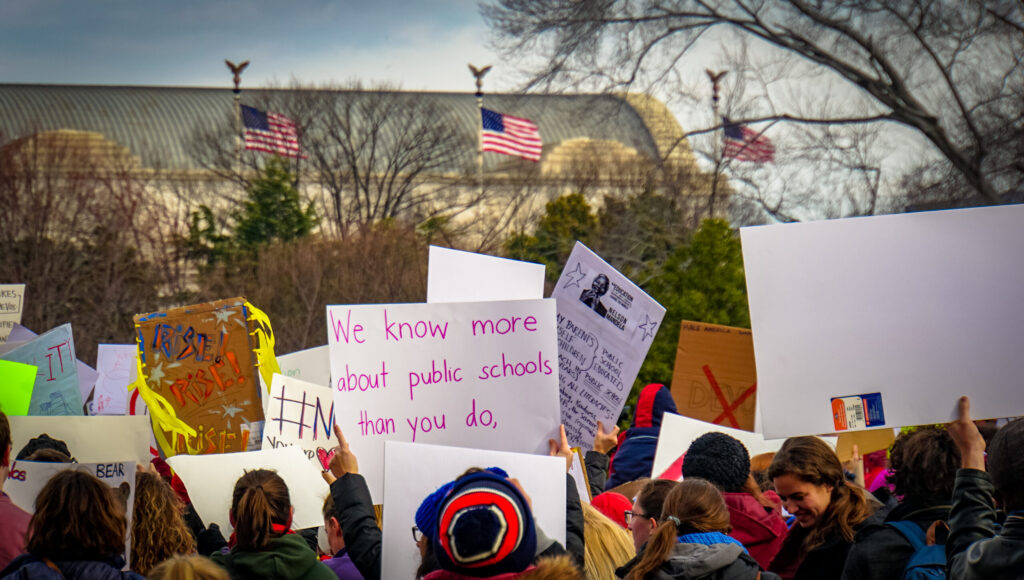
Regarding community-engaged projects and programs that community literacy scholars implement, Keshia McClantoc and Ada Hubrig have directed the Writing Lincoln Initiative where they “collaborated with several local nonprofits and collectives to offer a range of literacy programs, usually designed with our community collaborators” such as partnering with a “nonprofit organization that assisted immigrants and refugees from South Asia in a number of literacy-related tasks, including reading mail, filling out application forms, and other tasks with primarily adult English Language Learners.”20 Elsewhere, Erin has collaborated with the Prince George’s County Memorial Library system to create and help facilitate a social justice summer camp for local teens that taught teens about “Research, Ethics, Problem Solving, History of Social Justice, and Social Entrepreneurship & Enterprise.”21 Just as anti-intellectualism is not a new phenomenon, neither is the pursuit of community-engaged work by literacy scholars. The scholars named here, and many more, are not only theorizing ways to amplify the literacy learning happening outside traditional academia but are also partnering with community members to enact social change.
In his column, “The Revolution Will Be Literate,” Chris Stewart writes,
Learning must be everywhere, open, a collective project of resistant, informed, and activist adults…Aunties, buy your nieces and nephews books. Uncles, get them into museums. Grandparents, read to them. Guardians, teach them practical lessons about how our systems of government work. Community members––form more spaces for communal learning––for adults and kids. And voters––you know what to do. Elect the resistance and support public education.22
We agree with Stewart’s call for community-oriented approaches to responding to the anti-intellectual crisis in the U.S. By way of conclusion, allow us to highlight just a few examples of community learning initiatives. For instance, Jenn M. Jackson, a political science professor and community organizer, facilitates a Black Feminist Book Club where subscribers learn about issues of race, gender, sexuality, abolition, and policing.23 Profs and Pints are events occurring across bars, coffee shops, and off-campus venues where college professors give lectures about their subject specialty. The group advertises its programming as “No tuition or tests. Just lectures you’ll love” and “You won’t earn college credits but you’ll leave knowing more,” removing two important capitalist barriers that exist in the traditional educational space.24 John Friedman, an anthropology professor who was laid off during a moment when the humanities departments were being defunded, has continued to teach by facilitating lawn lectures for anyone interested in studying the humanities to join.25 Leah Barlow, an African American Studies professor, jump-started what is now known as HillmanTok University—TikTok’s unofficial HBCU—when she decided to bring her Intro to African American Studies course to TikTok. Now, other Black educators in various disciplines have joined to offer their expertise to a public audience.26 Finally, The Community Literacies Collaboratory (CLC) has programming called “The Possibilities Hub,” where they invite experts, activists, and community members to lead 6–8 week seminars on various topics. In 2025, the CLC partnered with Wolf—Director of Narrative Change at Community Spring—to bring a seminar where community members explored “literacies that can expand [their] collective power to resist state violence and imagine liberatory alternatives.”27
These are a few examples of how communities outside the traditional classroom space are combating anti-intellectualism, a fascist literacy practice that attempts to delegitimize the expertise of various disciplines and scholars, notably scholars coming from marginalized communities or disciplines that study multiple systems of oppression. We implore educators and community members to combat the anti-intellectual fascist movement through community-empowered literacies.
Bibliography
“About Profs and Pints.” Profs and Pints. Accessed April 9, 2026. https://www.profsandpints.com/about-profs-and-pints.
Alabama. Relating to Diversity, Equity, and Inclusion. Act No. 2024-34 (SB 129). 2024. https://arc-sos.state.al.us/cgi/actdetail.mbr/detail?page=act&year=2024&act=34.
Banks, Adams J. Digital Griots: African American Rhetoric in a Multimedia Age. Southern Illinois University Press, 2011.
Carillo, Ellen C. “Navigating this Perfect Storm: Teaching Critical Reading in the Face of the Common Core State Standards, Fake News, and Google.” Pedagogy: Critical Approaches to Teaching Literature, Language, Composition, and Culture 19, no. 1 (2019): 135–159.
Cavallaro, Alexandra. “Making Citizens Behind Bars (and the Stories We Tell About It): Queering Approaches to Prison Literacy Programs.” Literacy in Composition Studies 7, no. 1 (2019): 1-21.
Cedillo, Christina V. “Diversity, Technology, and Composition: Honoring Students’ Multimodal Home Places.” Present Tense: A Journal of Rhetoric in Society 6, no. 2 (2017): 1 – 9, https://www.presenttensejournal.org/wp-content/uploads/2017/08/Cedillo.pdf.
Cloud, Dana L. “The Rhetoric of <Family Values>: Scapegoating, Utopia, and the Privatization of Social Responsibility.” Western Journal of Communication 62, no. 4 (1998): 387–419.
Florida. Higher Education. Chapter No. 2023-82 (SB 266). 2023. https://www.flsenate.gov/Session/Bill/2023/266.
Florida. Individual Freedom Act. Chapter No. 2022-72 (HB 7). 2022. https://www.flsenate.gov/Session/Bill/2022/7/.
Fox, Ragan. “Refining McGee’s Ideograph: Celebrating 45 Years of Ideographic Criticism.” Western Journal of Communication 89, no. 2 (2025): 278-97.
Friedman, Jon. “Thanks for Firing Me.” Next Avenue, June 1, 2023. https://www.nextavenue.org/thanks-for-firing-me/.
Gee, James Paul. Social Linguistics and Literacies: Ideology in Discourses. Routledge, 2012.
Green, Erin. “Radically Imagining Community Programs: Reflection, Collaboration, and Organizer Toolkits.” Community Literacy Journal 18, no. 1 (2024): 57-71.
Hofstadter, Richard. Anti-intellectualism in American Life. Vintage, 1966.
Horowitch, Rose. “The Elite College Students Who Can’t Read Books.” The Atlantic, October 4, 2024. https://www.theatlantic.com/magazine/archive/2024/11/the-elite-college-students-who-cant-read-books/679945/.
hooks, bell. Teaching to Transgress: Education as a Practice of Freedom. Routledge, 1994.
Jackson, Jenn M. “Black Feminist Book Club.” Accessed April 9, 2026. https://jennmjackson.com/blackfeministbookclub/
Johnson, Gavin P. “Don’t Act Like You Forgot: Approaching Another Literacy ‘Crisis’ by (Re)Considering What We Know about Teaching Writing with and through Technologies.” Composition Studies 51, no. 1 (2023): 169–218.
Kahloon, Idrees. “America is Sliding Toward Illiteracy.” The Atlantic, October 14, 2025. https://www.theatlantic.com/ideas/archive/2025/10/education-decline-low-expectations/684526/.
Kelaidis, Katherine. ““Debate Me” Bro Culture has Ruined Civil Discourse.” Salon, September 17, 2025. https://www.salon.com/2025/09/17/how-debate-me-bro-culture-ruined-civil-discourse/.
Kim, Juliana. “Florida says AP Class Teaches Critical Race Theory. Here’s What’s Really in the Course.” NPR, January 22, 2023. https://www.npr.org/2023/01/22/1150259944/florida-rejects-ap-class-african-american-studies.
Kynard, Carmen. “Black Digital-Cultural Imaginations: Black Visuality and Aesthetic Refuge in the M4BL Classroom.” enculturation: a journal of rhetoric, writing, and culture, March 24, 2022. https://enculturation.net/black_digital_culture_imaginations.
McClantoc, Keshia and Ada Hubrig. “An Unglamorous Queercrip Account of Failure in the Writing Lincoln Initiative.” Reflections: A Journal of Community-Engaged Writing and Rhetoric 23, no. 1 (2023): 56-90, https://reflectionsjournal.net/2023/12/an-unglamorous-queercrip-account-of-failure-in-the-writing-lincoln-initiative/.
McGee, Michael Calvin. “The ‘Ideograph’: A Link Between Rhetoric and Ideology.” Quarterly Journal of Speech 66, no. 1 (1980): 1-16.
McMahon, Linda. “Secretary McMahon: Our Department’s Final Mission.” U.S. Department of Education, 3 March 2025, https://www.ed.gov/about/news/speech/secretary-mcmahon-our-departments-final-mission.
Moss, Beverly J. A Community Text Arises: A Literate Text and a Literacy Tradition in African-American Churches. Hampton Press, 2003.
Ohio. Advance Ohio Higher Education Act. Senate Bill 1, 136th General Assembly. 2025. https://ohiosenate.gov/legislation/136/sb1.
Pigg, Stacey. “Distracted by Digital Writing: Unruly Bodies and the Schooling of Literacy.” Strategic Discourse: The Politics of (New) Literacy Crisis, edited by Lynn C. Lewis, Computers and Composition Digital Press/Utah State University Press, 2015.
Prichard, Eric Darnell. Fashioning Lives: Black Queers and the Politics of Literacy. Southern Illinois University Press, 2016.
Rascoe, Ayesha. “‘Hillmantok,’ the Unofficial HBCU of TikTok, is Educating People About Black History.” NPR, February 16, 2025. https://www.npr.org/2025/02/16/nx-s1-5291480/hillmantok-the-unofficial-hbcu-of-tiktok-is-educating-people-about-black-history.
Stewart, Chris. “The Revolution Will Be Literate: Why We Must Reclaim Truth, Science, and Our Children’s Minds.” ed post, https://www.edpost.com/stories/the-revolution-will-be-literate-why-we-must-reclaim-truth-science-and-our-childrens-minds.
“Summer 2025 Possibilities Hub: How Not to Peddle Trauma Porn: Queer Black Imagination in Impossible Times.” The Community Literacies Collaboratory. Accessed April 9, 2026.
Texas. SB 37. 89th Legislature, Regular Session, 89R 13937 MM-D. 2025. https://capitol.texas.gov/BillLookup/History.aspx?LegSess=89R&Bill=SB37.
Trimbur, John. “Literacy and the Discourse of Crisis.” The Politics of Writing Instruction: Postsecondary, ed. Richard Bullock and John Trimbur. Boynton/Cook Publishers, 1991, 277–295.
Trimbur, John. “Revisiting ‘Literacy and the Discourse of Crisis’ in the Era of Neoliberalism.” Strategic Discourse: The Politics of (New) Literacy Crisis, edited by Lynn C. Lewis. Computers and Composition Digital Press/Utah State University Press, 2015.
Trump, Donald. “Improving Education Outcomes by Empowering Parents, States, and Communities.” Federal Register, March 20, 2025, https://www.federalregister.gov/documents/2025/03/25/2025-05213/improving-education-outcomes-by-empowering-parents-states-and-communities.
Vance, JD. “The Universities are the Enemy.” November 2, 2021. National Conservatism Conference II, Orlando, Florida. YouTube, https://www.youtube.com/watch?v=0FR65Cifnhw.
White, Morton. “Reflections on Anti-intellectualism.” Daedalus 91, no. 3 (1962): 457–468.
Footnotes
- Rose Horowitch, “The Elite College Students Who Can’t Read Books,” The Atlantic, October 1, 2024, https://www.theatlantic.com/magazine/archive/2024/11/the-elite-college-students-who-cant-read-books/679945/. ↩︎
- Idrees Kahloon, “America is Sliding Toward Illiteracy,” The Atlantic, October 14, 2025, https://www.theatlantic.com/ideas/archive/2025/10/education-decline-low-expectations/684526/. ↩︎
- See Ellen Carillo, “Navigating this Perfect Storm: Teaching Critical Reading in the Face of the Common Core State Standards, Fake News, and Google,” Pedagogy: Critical Approaches to Teaching Literature, Language, Composition, and Culture 19, no. 1 (2019): 135–159; Gavin P. Johnson, “Don’t Act Like You Forgot: Approaching Another Literacy ‘Crisis’ by (Re)Considering What We Know about Teaching Writing with and through Technologies,” Composition Studies 51, no. 1 (2023): 169–218; Stacey Pigg, “Distracted by Digital Writing: Unruly Bodies and the Schooling of Literacy,” Strategic Discourse: The Politics of (New) Literacy Crisis, ed. Lynn C. Lewis, (Computers and Composition Digital Press/Utah State University Press, 2015); John Trimbur, “Literacy and the Discourse of Crisis,” The Politics of Writing Instruction: Postsecondary, ed. Richard Bullock and John Trimbur, (Boynton/Cook Publishers, 1991): 277–295. ↩︎
- James Paul Gee, Social Linguistics and Literacies: Ideology in Discourses (New York: Routledge, 2012), 62. ↩︎
- John Trimbur, “Revisiting ‘Literacy and the Discourse of Crisis’ in the Era of Neoliberalism,” Strategic Discourse: The Politics of (New) Literacy Crisis, ed. Lynn C. Lewis (Utah: Computers and Composition Digital Press/Utah State University Press, 2015). ↩︎
- JD Vance, “The Universities Are the Enemy,” November 2, 2021, National Conservatism Conference, Orlando, FL, Youtube, 7:46 – 7:54, https://www.youtube.com/watch?v=0FR65Cifnhw&t=5s. ↩︎
- Richard Hofstadter, Anti-intellectualism in American Life (New York: Vintage, 1966), 7. ↩︎
- See Adams J. Banks, Digital Griots: African American Rhetoric in a Multimedia Age (Carbondale: Southern Illinois University Press, 2011); Christina V Cedillo, “Diversity, Technology, and Composition: Honoring Students’ Multimodal Home Places,” Present Tense: A Journal of Rhetoric in Society 6, no. 2 (2017): 1 – 9; Carmen Kynard, “Black Digital-Cultural Imaginations: Black Visuality and Aesthetic Refuge in the M4BL Classroom,” enculturation: a journal of rhetoric, writing, and culture, March 24, 2022, https://enculturation.net/black_digital_culture_imaginations. ↩︎
- See Michael Calvin McGee, “The ‘Ideograph’: A Link Between Rhetoric and Ideology,” Quarterly Journal of Speech 66, no. 1 (1980): 1-16; Dana L Cloud, “The Rhetoric of <Family Values>: Scapegoating, Utopia, and the Privatization of Social Responsibility,” Western Journal of Communication 62, no. 4 (1998): 387–419; Ragan Fox, “Refining McGee’s Ideograph: Celebrating 45 Years of Ideographic Criticism,” Western Journal of Communication 89, no. 2 (2025): 278-97. ↩︎
- Morton White, “Reflections on Anti-Intellectualism,” Daedalus 91, no. 3 (1962): 457 – 68. ↩︎
- White, 458. ↩︎
- Juliana Kim, “Florida says AP Class Teaches Critical Race Theory. Here’s What’s Really in the Course,” NPR, January 22, 2023, https://www.npr.org/2023/01/22/1150259944/florida-rejects-ap-class-african-american-studies. ↩︎
- Relating to Diversity, Equity, and Inclusion, State of Alabama, Act No. 2024-34 (SB 129), https://arc-sos.state.al.us/cgi/actdetail.mbr/detail?page=act&year=2024&act=34; Individual Freedom Act, State of Florida, Chapter No. 2022-72 (HB 7), https://www.flsenate.gov/Session/Bill/2022/7/; Higher Education, State of Florida, Chapter No. 2023-82 (SB 266), https://www.flsenate.gov/Session/Bill/2023/266; Advance Ohio Higher Education Act, State of Ohio, https://ohiosenate.gov/legislation/136/sb1; SB 37, State of Texas, 89R 13937 MM-D, https://capitol.texas.gov/BillLookup/History.aspx?LegSess=89R&Bill=SB37 ↩︎
- White, 458. ↩︎
- Linda McMahon, “Secretary McMahon: Our Department’s Final Mission,” U.S. Department of Education, March 3, 2025, https://www.ed.gov/about/news/speech/secretary-mcmahon-our-departments-final-mission. ↩︎
- bell hooks, Teaching to Transgress: Education as a Practice of Freedom (New York: Routledge, 1994). ↩︎
- Eric Darnell Pritchard, Fashioning Lives: Black Queers and the Politics of Literacy (Carbondale: Southern Illinois University Press, 2016), 33. ↩︎
- Beverly Moss, A Community Text Arises: A Literate Text and a Literacy Tradition in African-American Churches (New York: Hampton Press, 2003), 20. ↩︎
- Alexandra Cavallaro, “Making Citizens Behind Bars (and the Stories We Tell About It): Queering Approaches to Prison Literacy Programs,” Literacy in Composition Studies 7, no. 1 (2019): 11 – 12. ↩︎
- Keshia McClantoc and Ada Hubrig, “An Unglamorous Queercrip Account of Failure in the Writing Lincoln Initiative,” Reflections: A Journal of Community-Engaged Writing and Rhetoric 23, no. 1 (2023): 65. ↩︎
- Erin Green, “Radically Imagining Community Programs: Reflection, Collaboration, and Organizer Toolkits,” Community Literacy Journal 18, no. 1 (2024): 63. ↩︎
- Chris Stewart. “The Revolution Will Be Literate: Why We Must Reclaim Truth, Science, and Our Children’s Minds,” ed post, July 8, 2025, https://www.edpost.com/stories/the-revolution-will-be-literate-why-we-must-reclaim-truth-science-and-our-childrens-minds. ↩︎
- Jenn M. Jackson, “Black Feminist Book Club,” accessed April 9, 2026, https://jennmjackson.com/blackfeministbookclub/ ↩︎
- About Profs and Pints,” Profs and Pints, accessed April 9, 2026, https://www.profsandpints.com/about-profs-and-pints ↩︎
- Jon Friedman, “Thanks for Firing Me,”, next avenue, June 1, 2023, https://www.nextavenue.org/thanks-for-firing-me/ ↩︎
- Ayesha Rascoe, “’Hillmantok’, the Unofficial HBCU of TikTok, is Educating People About Black History,” NPR, February 16, 2025, https://www.npr.org/2025/02/16/nx-s1-5291480/hillmantok-the-unofficial-hbcu-of-tiktok-is-educating-people-about-black-history ↩︎
- “Summer 2025 Possibilities Hub: How Not to Peddle Trauma Porn: Queer Black Imagination in Impossible Times,” The Community Literacies Collaboratory, accessed April 9, 2026, https://communityliteraciescollaboratory.com/events/summer-2025-possibilites-hub-how-not-to-peddle-trauma-porn-queer-black-imagination-in-impossible-times-2025-06-11 ↩︎