
Peace. When I first started writing corresponding rap lyrics in the margins while notetaking, I didn’t recognize that those rhymes were a second set of notes provided by my community about the subject. I didn’t understand that those bars were theorizing about everyday life. It didn’t resonate that these lyrics were our truths that needed to be centered. I just left them in the margins… Not anymore.
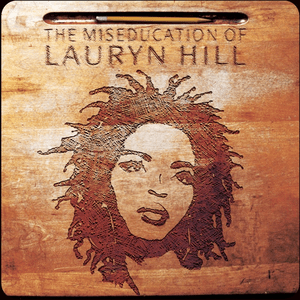
This is an intertextual journey featuring lyrics from Ms. Lauryn Hill’s The Miseducation of Lauryn Hill 1, of how and why I shifted my notes and my community from the margins to the center of the page with Hip Hop literacy (HHL). Hill’s award-winning album is a nod to Carter G. Woodson’s canonical text, The Mis-education of the Negro 2, which examined the oppressive education system designed to maintain the racist status quo driven by capitalism.
Hill is a rapper, singer and actress and starred in daytime TV and the movie Sister Act 2 alongside Whoopi Goldberg. Prior to The Miseducation, she was a member of the award-winning rap trio, The Fugees. After the group’s critically acclaimed album, The Score, Hill released her solo album, Miseducation. The album’s introduction informs us of Ms. Hill’s absence from school as the teacher takes attendance during class 3. Nevertheless, the MC lets us know she is still learning and shares her lessons. As an occasional class cutter and Hip Hop head, I relate to this album in many ways. This narrative explores life, love, and HHL—the ability to read, interpret, and articulate through Hip Hop elements—by highlighting the creative genius within the culture and explaining why I incorporate it into my pedagogy.
HHL is a multimodal educational toolkit used to critically explore aspects of life, enlightening oneself about one’s identity and the world. It provides a framework to connect with all participants through their respective cultures. Gloria Ladson-Billings’ work 4 with Hip Hop and the youth gives a better understanding of how engaging students’ culture is used to consider “critical perspectives on policies and practices that may have direct impact on their lives and communities.” With HHL, students and educators can examine a myriad of positionalities (real and perceived) and critique their perceptions, beliefs, and knowledge.
1. The Setup
“It’s funny how money changes the situation…
My emancipation doesn’t fit your equation”
“Lost Ones”5
The Bronx youth during the early 1970s challenged the intentional underserving of their urban community, which disregarded and silenced them. They took their voices to the streets to birth what we know today as Hip Hop. The first four elements of Hip Hop are graffiti (writing), DJing (mixing), breaking (dancing), and MCing (rapping). These elements provided creative outlets for New York City youth to express themselves and gain visibility amongst their peers 6 and the city. However, with Hip Hop’s rise, many were trying to cash in, and its authenticity began to wane. Subsequently, the fifth element, Knowledge of Self and Community, was introduced to remind the culture’s practitioners of who they are and their love for the culture, not the money. However, capitalism is an old and powerful force that seeks continuous domain and conquers at will.
The global majority (read: marginalized folx) has always valued education, but paradoxically, it hasn’t been provided equitably, while our indigenous ways of knowing have been widely shunned, discredited, demonized, and forbidden. Meanwhile, colonial education continually morphs to erase and/or exploit those in the margins for capitalist gain, power, and control. However, some of us have figured out how to evade the educational claws of the current empire, scathed and unscathed. Hill emancipated herself from the industry’s standards of doing things. For example, she had a child while pursuing her career, which was and still is frowned upon for women in media because it may hinder the commodification of their talent. Moreover, she took control over her sound and how she presented herself. During that time, Hill controlled her image when it came to fashion as opposed to the record label’s ideals. In one video she was shown in micro-length skirts and the next video was a wide-leg pants suit. She was and is her own.
I emancipated my knowledge systems through Hip Hop culture, which did not fit the calculated equation of oppression. After listening to so many rap songs and looking at such beautiful graffiti, I began to unlearn the settler colonial ideology of what it means to be “educated.” I learned for those of the African diaspora, oral history through songs and storytelling is part of our ancestral tradition and there is nothing inferior about it. In addition, our words and even the sounds when speaking have power and truth to them. This unlearning liberated me from colonial worldviews that are so ubiquitous.
2. The Early Foundations
“Hip Hop started in the heart”
“Superstar”7
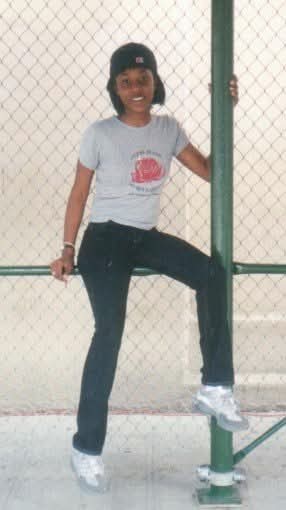
I was raised in a Jamaican household where manners and education were cornerstones in my upbringing. There was no limitation to the sources of education; my home was filled with books about various people and topics, and then there was the music. Everyone in my house loved music, no matter the genre; it created connections and memories. Therefore, my formative years were informed by literature and lyrics.
But nothing prepared me for Hip Hop. I remember the Saturday night that Hip Hop conquered my heart. It was a summer in the early 1990s in Brooklyn during Hip Hop’s “golden era,” when quality, originality, creativity, and representation reigned. I was captivated by the language, the beats, the flow, the dance moves, and the artistry at a block party. Wanting to understand it all, my heart raced with excitement as I keenly watched and cheered along. This would be the beginning of a love affair that continues to this day.
Growing up and seeing myself in school material wasn’t a given. However, rap lyrics painted pictures and told stories that were vividly connected to my world, for better or for worse. People in my neighborhood wrote their tags (their artistic signatures used in graffiti-ing), and their artwork was an acknowledgment of their presence and creativity. Depending on the song, there is movement to accompany it—expressions of freedom and resistance. My assigned readings couldn’t compete with the ghetto artistry and perfect verses over tight beats.8
The significance of Miseducation to me and this writing is the capturing of L-Boogie’s resistance, beauty, mess, journey and liberation. Who is more resistant and wants liberation than a teenager? When Miseducation was released, I was an adolescent navigating identity and independence. Hill did not fit in the boxes that the music industry created. Word. Moreover, seeing a Black woman darker than a brown paper bag unapologetically figuring out life for the world to see has left an immense impact on me. Facts. As an adult, the album resonates on a deeper level when it comes to life and learning… one bar at a time.
3. Learning the Literacies
“I was just a little girl (Little girl)
Skinny legs, a press and curl (Press and curl)…
Streets that nurtured Lauryn Hill (Uh-huh)
Made sure that I’d never go too far (Oh wah, oh wah, yo)”
“Every Ghetto, Every City”9
In Hip Hop’s School of Hard Knocks, there is a dialectical relationship between the streets and the cultural expressions, especially the music. “Every Ghetto, Every City,”10 L-Boogie was describing me, too. Hill held up a mirror and said, “Look, remember when we were younger…” and I saw myself eating my 25-cent bag of BBQ BonTon potato chips and doing my favorite dance, “The Whop.” I also remember surviving shoot-outs because guns replaced fists when young people had beef in the streets.
The streets of these ghettos/cities are simultaneously friends and foes, protecting and exposing us to the harms that exist. I consider myself lucky because they were more friends than foes to me. Hill and I were both nurtured in that sense. We had childhoods that were unforgettable, and the streets provided parameters that kept us from getting “lost” in the streets. To elaborate, there was a Black cowboy in my hood who used to greet children every day a block away from our school. He’d tip his hat and say, “Good morning, baby sisters.” We would reply the same with or without front teeth. We had a familial respect for him therefore we wouldn’t misbehave around him. If we did, it would get back to our grandparents. So, we could play and be children but not act out like others because there would be consequences.
Here, art and life do not imitate each other; they reflect and converse with each other. For me, it’s necessary to pay attention to what is being seen and heard. “Keeping your ear to the streets” became a double entendre. If it was street talk at the corner store or rhymes of caution, I listened. Hip Hop’s School of Hard Knocks curriculum isn’t linear, nor are the streets, because the syllabi are about life, and there is an understanding of what not going too far means, staying out of danger. This was HHL before I knew the term; nevertheless, I am a student of the game, a head of the class, and no subject was taboo.
I was a little older than the eighth graders featured in the unforgettable, insightful, and candid interludes when the album was released. This proved we weren’t “too young” to understand or voice our concepts about love or other topics. I was always outspoken, but hearing their voices on a rap album affirmed my self-expression and its nuances. In hindsight, the album’s format allowed me to be more vulnerable in certain spaces. Lauren’s voice, the young people’s voice, mattered, and reminded me, so did mine.
4. Hip Hop’s Integration into my Identity
“You’re part of my identity
I sometimes have a tendency (Ooh, oh)
To look at you religiously (Baby, baby)
‘Cause nothing even matters, to me”
“Nothing Even Matters”11
It’s not the rapper/actress Hill, but D’Angelo’s sultry voice that professes how his beloved impacts who he is and what he does. As for me, not only did I dress in Hip Hop attire, but rap lyrics also became a part of my vernacular. When Miseducation dropped, I had a plethora of rap lyrics under my belt, and I developed an obsession with the linguistic contortions of words and metaphors with their multiple meanings. It was mandatory to learn the rapid rapport that had me tongue-tied. (Shout out to Bone, Thugs & Harmony!) Therefore, when Shakespeare was assigned, it was easy. In Romeo and Juliet12 when Juliet’s mother described Paris as a book but never explicitly said he was a book, it reminded me of how Common personified Hip Hop in “I Used to Love H.E.R.”13
Rap lyrics became my sacred texts14 where shared beliefs, practices, codes, and aspirations are observed. Hip Hop has lessons, but my formal education never provided me with the space to express this truth. Moreover, “the classics”likeThe Catcher in the Rye15 didn’t have memorable lines or stories, so they didn’t matter after the test or paper was submitted. Therefore, due to an undercurrent of boredom, I cut class occasionally because the literary works that excited me were absent. I looked to Hip Hop for storylines and the lines that created the stories.
One day, a friend handed me The Coldest Winter Ever16 a new novel where the streets met the literary sheets. It was written by Sister Souljah, a rapper who didn’t bite her tongue, about the injustices that impinged on the Black community through the eyes of a 17-year-old trying to survive. In this unapologetic novel, I read about people, places, and things that I knew. I was stuck off the realness, word to Mobb Deep. This became my required reading; however, my grades in my AP classes reflected Daisy’s IQ from The Great Gatsby and I almost didn’t graduate… cause nothing even mattered…until the guidance counselor called my mom.
5. Hip Hop Literacy and Academic Refusal
“Our philosophy possibly speaks tongues”
“Everything is Everything”17
While pursuing my PhD, I re-read Abraham Maslow’s motivational theory18 and discovered rapper Meek Mill has a motivational theory within his lyrics that surpassed Maslow’s work. Further research revealed the Philly rapper also explores different forms of capital as theorized by Pierre Bourdieu. This highlighted the significance of using Hip Hop to change the continuous narrative of inferiority regarding marginalized groups.
With Sylvia Wynter’s work19 about undoing the harms of racialization by using the street intellect to understand truth, knowledge, and power, I solidified my argument and never looked back. I understood that a young Black man with a GED uses literary devices to connect our people with theories that impact the way we live. From what I know, Meek Mill is not aware of these theories and theorists; however, he, too, lyrically rationalizes these concepts. In Hip Hop culture, our philosophies are coded in verses, graffiti, mixing, dancing, fashion, and more. If you are not aware of the information that you are receiving, then you will not be able to comprehend what is being expressed, therefore rendering it illegible. On a grander level, Hip Hop’s rapport and any form of Black language are dismissed due to the maintenance of colonial rule; however, those who are listening will connect to what is being said.
This is when I unlocked another level of genius within HHL. It’s always been more than just words and expressions, but I unconsciously limited it to storytelling, chronicling, and braggadocio. Now, equipped with a more critical and theoretical lens provided by the culture, I began centering the intellectual authority and scholarship2021 of the geniuses in the margins. Centering Hip Hop reinforces the value of our ways of knowing and being. It draws from knowledge bases that informed us way before colonialism. It reminds us that we are not statistics, but thinkers, builders, and creators. Showing a student that their ability to speak two languages is not a deficit and nothing to be ashamed of, but instead an asset. Highlighting that their way of life is a skill that some don’t have. By employing Hip Hop’s fifth element, they know and see themselves and their community with more pride and resources. When educators honor their students’ identity it helps to facilitate lessons and create a conducive learning space.
In the art world, the term “genius” is problematic because it is subjective. However, my use of genius aligns with the Oxford English Dictionary’s definition22: “A person’s natural aptitude for, or inclination towards, a specified thing or action.” Like many rappers, Meek Mill’s lexicon and education are not rooted in academia; nevertheless, his experiential knowledge and meaning-making enable him to lyrically articulate his own motivational theory, which corresponds with forms of capital, allowing him not only to survive but also to succeed.23 Therefore, when Meek Mill’s “Dreams and Nightmares” 24plays, we relate to the adversities and the overcoming of them.
Moreover, acknowledging someone as a genius is not putting them on a pedestal. I am honoring their contribution to the disruption of the body of knowledge that has continuously pathologized and oppressed our existence. Does this mean that every rapper or Hip Hop practitioner is a genius? Nah, but that’s a different article.
6. The Significance of Absence
“But deep in my heart, the answer it was in me
And I made up my mind to define my destiny”
“The Miseducation of Lauryn Hill” 25
When Hill dropped “Doo Wop (That Thing)”26 she called out several issues, including but not limited to alcoholism, materialism, and unhealthy relationship dynamics. Even though Hill (1998) professes that she is “only human” and “been in the same predicament” as those she is addressing, Hip Hop feminist and scholar, Dr. Joan Morgan27 argued that to call her “judge-y” for calling Black women out on their aesthetics and relationships doesn’t do it any justice because the work and Hill exist in a gray area, where we, as Black women, exist fully and with contradiction.
Before my epiphany that my community had genius within itself, I had a savior complex that was judge-y of my community, and pursuing my Ph.D. was to “save” my community as if they were the deficit, as if they were less than because of how they behaved, dressed, and how they expressed themselves creatively. I wasn’t aware of how bad that sounds, but that’s where I was “arrogant, opinionated, and indebted because hip hop changed [my life].”28 Carter G. Woodson articulated that in academia, being judge-y is also typical of educated Blacks because of our racialized education (and other societal systems). Moreover, the ability to escape some of the biases, he argued:
“The thought of the inferiority of the Negro is drilled into him in almost every class he enters and in almost every book he studies. If he happens to leave school after he masters the fundamentals, before he finishes high school or reaches college, he will naturally escape some of this bias and may recover in time to be of service to his people.”29
Cutting class, being educated by Hip Hop, and detaching from academia’s canon are all forms of leaving school to not only be in service, but to work alongside my people. To be in service, I am providing access and resources. To work alongside is to disrupt the hierarchical distance created because I have a PhD, as some with a doctorate tend to look down on those they teach, which may disrupt the learning process. I am not her. Moreover, I am an eternal student. There is still much to learn from my community, but to do so, I must be part of it. In my later academic career, I recovered by seeking out work that mirrored my identity. Dewey30 was not doing it, and therefore, I had to undo Dewey in the process. The significance of my existence was learned through the absence of formal education. Hill was also being educated despite her absence, with experiential knowledge. One can argue there are lessons in the interlude conversations about love; however, in her defense, it wasn’t a regular day of class, so the social-emotional learning that occurred wasn’t standard.31
Therefore, I’m grateful for some Hip Hop and Black scholars who, however scathed, teach out of love and uplift our people because they understand how colonial education is harmful and value and use other knowledge systems to educate their students. Now, I understand what’s happening and why. We didn’t create mass incarceration, extrajudicial killings, or redlining. We didn’t bring drugs and guns into our community. We didn’t make the conditions that keep many of us in survival mode, which creates an “I gotta do what I gotta do” mentality. We didn’t instigate the status wars either. This doesn’t mean that my people should not be accountable, and this is not a “woe is me” stance. I am stating that I am aware of the causes and effects in my community. If the odds against us were removed, we would flourish even more. I’m no longer trying to “save” anyone, but to show my community that we are more than the negativity that’s internalized, and what we create is proof of that.
So often, we search for answers outside of the source that we are working to improve. However, if we took a page out of a rhyme or sketchbook, we would see therein lies the answer. The work, regardless of its current state, can guide us. Moreover, it indicates where things are going, and the destinies are limitless. Hip Hop is a global phenomenon that connects brilliance with resistance to dismantle the status quo. It creates a dream space of future possibilities.
The genius in this is that young people created these forms of expression to articulate the worlds they lived in. These forms of expression articulate their genius. In Nipsey Hussle’s “Dedication,”32 he rapped, “Young black ni–a trapped and he can’t change it/Know he a genius, he just can’t claim it/’Cause they left him no platforms to explain it.” These lyrics exemplify living in an oppressed environment while being brilliant and deprived of resources and/or access to do anything with their genius. Is everyone in these conditions? No, but it shows those oppressed are not monolithic and that not everyone knows how to navigate the systemic conditions they’re in. Conversely, in “Guantanamera”33, Hill professes, “Pure traits of genius, goddess of Black Venus,” which informs us that this young Black woman not only navigates the world with what she has and knows, but also unapologetically steps into her power for her survival, regardless of what others think of her. HHL enlightens and educates us about these nuances.
7. Navigating with Purpose
“Let me be patient, let me be kind
Make me unselfish without being blind
Though I may suffer, I’ll envy it not
And endure what comes
‘Cause he’s all that I got…
Tell him I need him
Tell him I love him
And it’ll be alright”
“Tell Him”34
The final track on Miseducation35 is a biblically-laced love letter that informs me of how to view Hip Hop: To see the good, the bad, and the ugly (including but not limited to misogyny, homophobia, violence, and the glorification of drug selling and use) with love. Like the crust in our eyes when we wake up, we mustn’t be blind to it. Looking in the HHL mirror, we see imperfections that are microcosmic representations of society. This will never be an excuse for the blatant disrespect. And to keep it a buck, loving Hip Hop is challenging at times.3637 It hurts. I can’t romanticize it, but I know why the disrespect exists. It’s bigger than Hip Hop, and the culture is highlighting systemic issues. Moreover, the soulful ballad addresses the misuse of the fifth element: “Now I may have wisdom/And knowledge on Earth/ But if I speak wrong, ooh, then what is it worth?” Knowledge of self and community helps me to critically analyze our culture with compassion and articulate experiences from an anti-deficit perspective,38 which educates as opposed to weaponizing what we have against my community.
Hill’s reference to patience, faith, and love reminds me of the importance of navigating this context with a critical awareness. The mirror shows resilience, consciousness, beauty, inspiration, and love, too. However, we see more of the negative than the positive. Hip Hop teaches how to read and explain through the genius lens of those relegated to the margins, by centering their experiences, understanding that they’re not happening in a bubble, and therefore acknowledging all its parts. Those in the margins have an expansive lens to see the world with a view that includes love and community. The colonial lens intentionally erases and distorts truths and knowledge to a myopic view to maintain dominance and disenfranchisement while focusing on individualism.
My brother Keith reminded me that the margins are like the dams of the Nile. They do more harm than good by blocking the natural flow and preventing nutrients from depositing into the banks. Moreover, the funding for the dams could have been reallocated to other necessities. It’s only a matter of time before nature takes back the reins and restores the natural balance. And it was only a matter of time before the words in the margins flowed into the center of the page. Now, I center our words, art, love, contradictions, challenges, and genius.
As a Hip Hop theorist and education researcher, I’ve been studying the culture for over a decade and have been a part of it for over 35 years. Over the years, Hip Hop slipped into my academic work as examples and references, became subtitles and epigraphs, and is now a cornerstone of my theoretical syntheses and pedagogical practices.
Hip Hop taught me to value, listen, read, write, and represent myself and my community. What led me to this may seem like an accident, but it was, in fact, a destined detour for my purpose and passion. See, Hip Hop has always been a part of my identity, but society doesn’t deem it an intellectual apparatus. The day this completely shifted for me, I found a key to open doors; a bridge that connects, and a platform that elevates. Replacing “him” with “Hip Hop” and using my HHL tools to learn with love while centering the voices of the genius in the margins, you know what I realized? … It’ll be alright.
Not bad for two young Black women who used to cut class.
Bibliography
Anderson, Elijah. “The Cosmopolitan Canopy.” The Annals of the American Academy of Political and Social Science 595, no. 1 (2004): 14–31.
Bourdieu, Pierre. “The Forms of Capital,” in The Sociology of Economic life, ed. Mark Granovetter (Routledge, 2018), 78-92.
Common. “I Used to Love H.E.R.” Recorded ca. 1994. Track 2 on Resurrection. Relativity Records, cassette tape.
Dewey, John. Democracy and Education. Edited by Nicholas Tampio. Columbia University Press, 2024.
Duvernay, Ava (@avaetc). “To be a woman who loves hip hop at times is to be in love with your abuser. Because the music was and is that. And yet the culture is ours.” Twitter (now X), August 16, 2015.
Harper, Shaun R. “An Anti‐Deficit Achievement Framework for Research on Students of Color in STEM.” New Directions for Institutional Research, no. 148 (2010): 63-74.
Famuyiwa, Rick, dir. Brown Sugar. 20th Century Fox Home Entertainment, 2002. DVD.
Hill, Lauryn. The Miseducation of Lauryn Hill. Recorded ca 1997 – 1998. Ruffhouse Records/Columbia Reccords, compact disc.
Hussle, Nipsey. “Dedication.” Recorded ca. 2018. Track 5 on Victory Lap. All Money In, No Money Out/Atlantic Records, TIDAL.
Hutchinson, Kashema. “Meek Against the Worldviews: Exploring and Reimagining Theoretical Frameworks Through the Lens of Rapper Meek Mill.” Presentation at The African American Studies Graduate Student Conference at Princeton University, Princeton, NJ, October 2018.
Jean, Wyclef. “Guantanamera” featuring Celia Cruz, Jeni Fujita, and Lauryn Hill. Recorded ca 1997. Track 5 on The Carnival. Ruffhouse/Columbia, compact disc.
Ladson-Billings, Gloria. “Culturally Relevant Pedagogy 2.0: Aka the Remix.” Harvard Educational Review 84, no. 1 (2014): 74-84.
Maslow, Abraham. “A Theory of Human Motivation.” Psychological Review 50, no. 4 (1943): 370.
Mill, Meek. “Dreams and Nightmares.” Recorded ca. 2012. Track 1 on Dreams and Nightmares. Maybach Music Group/Warner Bros, compact disc.
Moore, EbonyJanice. All the Black Girls Are Activists. Simon and Schuster, 2023.
Morgan, Joan. When Chickenheads Come Home to Roost: A Hip-Hop Feminist Breaks It Down. Simon and Schuster, 1999.
Morgan, Joan. She Begat This: 20 Years of the Miseducation of Lauryn Hill. Simon and Schuster, 2018.
Salinger, J. D. 1951. The Catcher in the Rye. Centennial edition; first Back Bay paperback edition. New York: Back Bay Books/Little, Brown and Company.
Shakespeare, William. Romeo and Juliet. Edited by Terence John Bew Spencer. Penguin, 1996.
Silver, Tony, dir. Style Wars. 1983; Public Art Films, 2003. DVD.
Souljah, Sister. The Coldest Winter Ever. Washington Square Press, 1999.
Spellmon, David. Just Like Music: Social Emotional Learning Inspired by Hip Hop. Positive Archer Publishing, 2020.
Woodson, Carter G. The Mis-education of the Negro. Penguin, 2023.
Wynter, Sylvia. “No Humans Involved: An Open Letter to My Colleagues.” Forum NHI: Knowledge for the 21st Century 1, no. 1 (1994): 42-103.
Notes
- Lauryn Hill, The Miseducation of Lauryn Hill, recorded ca. 1997 – 1998, Ruffhouse Records/Columbia Records, compact disc. ↩︎
- Carter G.Woodson, The Mis-education of the Negro (Penguin, 2023). ↩︎
- Lauryn Hill, “Intro,” recorded circa 1997 – 1998, track 1 on The Miseducation of Lauryn Hill, Ruffhouse Records/Columbia Records, compact disc. ↩︎
- Gloria Ladson-Billings, “Culturally Relevant Pedagogy 2.0: Aka the Remix,” Harvard Educational Review, 84, no. 1 (2014): 78. ↩︎
- Lauryn Hill, “Lost Ones,” recorded ca. 1997 – 1998, track 2 on The Miseducation of Lauryn Hill, Ruffhouse Records/Columbia Records, compact disc. ↩︎
- Style Wars, directed by Tony Silver (1983, Brooklyn, NY, Public Art Films, 2003), DVD. ↩︎
- Lauryn Hill, “Superstar,” recorded ca. 1997 – 1998, track 6 on The Miseducation of Lauryn Hill, Ruffhouse Records/Columbia Records, compact disc. ↩︎
- Brown Sugar, directed by Rick Famuyiwa (2002; Burbank, CA: 20th Century Fox, 2003), DVD. ↩︎
- Lauryn Hill, “Every Ghetto, Every City,” recorded ca. 1997 – 1998, track 11 on The Miseducation of Lauryn Hill, Ruffhouse Records/Columbia Records, compact disc. ↩︎
- Ibid. ↩︎
- Lauryn Hill, “Nothing Even Matters,” recorded ca. 1997 – 1998, track 12 on The Miseducation of Lauryn Hill, Ruffhouse Records/Columbia Records, compact disc. ↩︎
- William Shakespeare, Romeo and Juliet, ed. Terence John Bew Spencer (Penguin, 1996). ↩︎
- Common, “I Used to Love H.E.R.,” recorded 1994, track 2 on Resurrection. Relativity Records, compact disc. ↩︎
- EbonyJanice Moore, All the Black Girls Are Activists (Simon and Schuster, 2023). ↩︎
- J. D. Salinger, The Catcher in the Rye (Little Brown Company, 1951). ↩︎
- Sister Souljah, The Coldest Winter Ever (Washington Square Press, 1999). ↩︎
- Lauryn Hill, “Everything is Everything,” recorded ca 1997 – 1998, track 13 on The Miseducation of Lauryn Hill, Ruffhouse Records/Columbia Records, compact disc. ↩︎
- Abraham Maslow, “A Theory of Human Motivation,” Psychological Review 50, no. 4 (1943): 370. ↩︎
- Sylvia Wynter, “No Humans Involved: An Open Letter to My Colleagues,” Forum NHI: Knowledge for the 21st Century 1, no. 1 (1994): 42-103. ↩︎
- Kashema Hutchinson, “meek against the worldviews: exploring and reimagining theoretical frameworks through the lens of rapper Meek Mill,” (presentation, The African American Studies Graduate Student Conference at Princeton University, Princeton, NJ, 2018). ↩︎
- EbonyJanice, 116-118. ↩︎
- Oxford English Dictionary, s.v. “Genius,” accessed 2025, https://doi.org/10.1093/OED/6484535206. ↩︎
- Elijah Anderson, “The Cosmopolitan Canopy,” The Annals of the American Academy of Political and Social Science 595, no 1 (2004): 14–31. ↩︎
- Meek Mill, “Dreams and Nightmares,” recorded ca. 2012, track 1 on Dreams and Nightmares, Maybach Music Group/Warner Bros. Records, compact disc. ↩︎
- Lauryn Hill, “The Miseducation of Lauryn Hill,” recorded ca 1997 – 1998, track 14 on The Miseducation of Lauryn Hill, Ruffhouse Records/Columbia Records, compact disc. ↩︎
- Lauryn Hill, “Doo Wop (That Thing),” recorded ca 1997 – 1998, track 5 on The Miseducation of Lauryn Hill. Ruffhouse Records/Columbia Records, compact disc. ↩︎
- Joan Morgan, She Begat This: 20 Years of the Miseducation of Lauryn Hill (Simon and Schuster, 2018). ↩︎
- Ibid., 21. ↩︎
- Woodson, 2. . ↩︎
- John Dewey, Democracy and Education, ed. Nicholas Tampio (Columbia University Press, 2024). This book is marred with offensive language that creates implicit biases towards marginalized children. ↩︎
- David Spellmon, Just Like Music: Social Emotional Learning Inspired by Hip Hop (Positive Archer Publishing, 2020). ↩︎
- Nipsey Hussle, “Dedication,” recorded ca 2018, track 5 on Victory Lap. All Money In, No Money Out/Atlantic Records, TIDAL. ↩︎
- Wyclef Jean, “Guantanamera,” featuring Celia Cruz, Jeni Fujita, and Lauryn Hill, recorded ca. 1997, track 5 on The Carnival, Ruffhouse/Columbia, compact disc. ↩︎
- Lauryn Hill, “Tell Him,” recorded ca 1997 – 1998, track 16 on The Miseducation of Lauryn Hill, Ruffhouse Records/Columbia Records, compact disc. ↩︎
- Ibid. ↩︎
- Joan Morgan, When Chicken Heads Come to Roost (Simon & Schuster, 1998). ↩︎
- Ava DuVernay (@avaetc), “To be a woman who loves hip hop at times is to be in love with your abuser. Because the music was and is that. And yet the culture is ours,” Twitter (now X), August 16, 2015. ↩︎
- Shaun R. Harper, “An Anti‐Deficit Achievement Framework for Research on Students of Color in STEM,” New Directions for Institutional Research, no. 148 (2010): 63-74. ↩︎